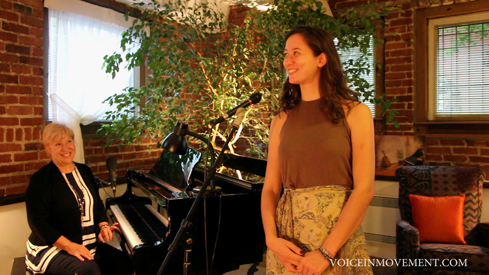
Dorothe's Lesson To better understand the exercises
Take notes
- Observe Closely and Take Notes
- Understanding is 75% of the Work
- Mastering is 25% of the Work
- Sing Along and Work with Us
Thank you, Dorothe.
Take notes
Thank you, Dorothe.
Analyzing how your voice feels is a very important first step in order to decide what exercise will be best for you.
You may feel very flexible and resonant one day and the next not so much, so make sure you give yourself a few minutes to check where you are vocally.
Here we are doing a moderately difficult staccato exercise to gauge how the diaphragm is working and how resonant the voice is.
A difficult but very effective exercise to establish correct air pressure and breath control
CHECK LISTNow that we have more space in the throat and better control of the air we move to the first exercise.
CHECK LISTWhat do we call warming up the voice?
The air is the first objective. Making sure the diaphragm is working is essential, and the staccato exercise is a perfect way to awaken the diaphragm and refine its action.
CHECK LISTTo awaken the beautiful dark colors of the tone, the chest area must be resonant.
We DO NOT sing IN the chest, it vibrates in sympathy with the lower register, adds color to the midrange voice and, especially for classical singers, serves as a support for the top range. It is the seat of the voice. We build on it.
We awaken the head area at the end of a vocal warm up because the muscles must be relaxed and tension free, the breath totally controlled and perfectly under pressure.
The beautiful voice has ALL resonating areas awakened and vibrant, like a painter who needs all the colors to have the right tools for expression.
CHECK LIST
I would love to hear from you and get your thoughts, comments and feedback about this website as well as any questions you may have.
Email me at :
Website: Johanne Desforges